
Collect Fares Like a Local Traveler in Any Market
Our rotating residential IPs let your scraper appear as a local, so you collect data that real people actually see, not the inflated results served to detected bots.

.webp)
What Are Rotating Residential Proxies for Travel Fare Aggregation?
Rotating residential proxies let your scraper collect travel fares as if you were a local traveler in each market, instead of a datacenter bot. Airlines and online travel agencies (OTAs) like Kayak and Skyscanner adjust pricing based on information they collect on you.
A scraper running through a datacenter IP doesn't just risk getting blocked; it risks collecting the wrong data entirely. Residential proxies route each request through a real ISP-assigned IP from your target market, so the data you collect is what a traveler in that city actually sees, like accurate fares, live availability, fare calendars, "only X seats left" notices, promo banners, amenity details, and ratings.
With GoProxies, you can gather valuable travel pricing data without disruptions or inconsistencies.


Travel Platforms Fight Back. We Help You Win
Booking platforms limit repeated requests from the same IPs, personalize fares by location and browsing behavior, and return inaccurate prices when traffic looks automated. Our rotating residential proxies solve all three.

IP Bans & Blocklists
Travel platforms are aggressive bot-blockers. Kayak runs Akamai Bot Manager (rated 5/5 difficulty). Skyscanner runs DataDome, rated 4 out of 5. Our residential IPs rotate automatically, distributing requests across fresh ISP-assigned IPs that booking platforms have no reason to suspect.

Bypass Dynamic Pricing
Fares depend on location, purchasing power, and competition. A traveler from the US pays more than one from India; not because the seat costs more, but because the algorithm assumes a higher willingness to pay. Our global residential proxies let you collect fares as a local user anywhere, so your dataset reflects true market pricing.

Behavioral Tracking & Price Inflation
Search the same route twice from the same IP, and you're likely to see the price go up. Agencies track repeat searches as a sign of high interest and increase prices accordingly. IP rotation breaks the loop because each request comes from a fresh IP with no search history, so you collect neutral market prices rather than inflated ones.

CAPTCHA & Rate Limits
Kayak triggers Captcha challenges. Skyscanner rate-limits aggressively. Both platforms are designed to make continuous, large-scale automated data scraping difficult. Automatic IP rotation keeps per-IP request counts low, so you never really hit rate limit thresholds, and our clean residential IPs rarely trigger CAPTCHA challenges in the first place.
The Edge That Comes From Seeing What Travelers See
Flight fares, hotel rates, availability calendars, booking intelligence, tour slots, review sentiment – travel data is only as useful as it is accurate. GoProxies enables you to scrape travel data confidently.
Why Use Rotating Residential Proxies for Travel Fare Aggregation?
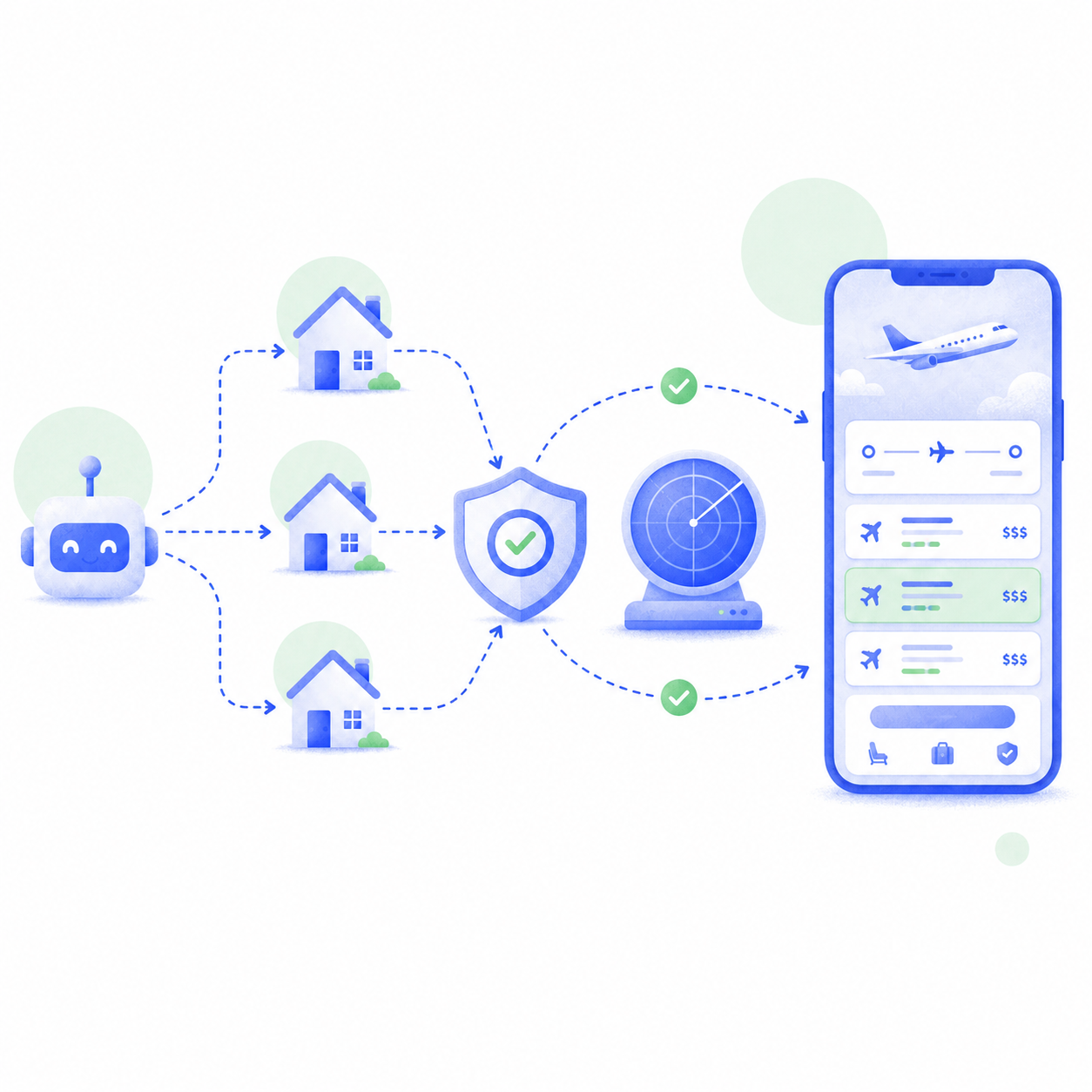
Travel platforms use advanced detection systems that analyze IP reputation, request patterns, and user behavior. Without proper infrastructure, your scraping attempts can result in blocked requests, incomplete datasets, or inaccurate pricing due to personalization.
Airlines and OTAs use IPs, geolocation, device type, and browsing history to determine which fare to show. The same flight from London to New York can return different prices depending on whether you're searching from a UK residential IP, a US residential IP, or a datacenter range. Collecting fares through datacenter proxies doesn't just risk blocks. It risks building your entire comparison engine on prices that no real traveler would ever actually be offered. Start collecting accurate data today!
How IP Rotation Improves Travel Fare Aggregation?
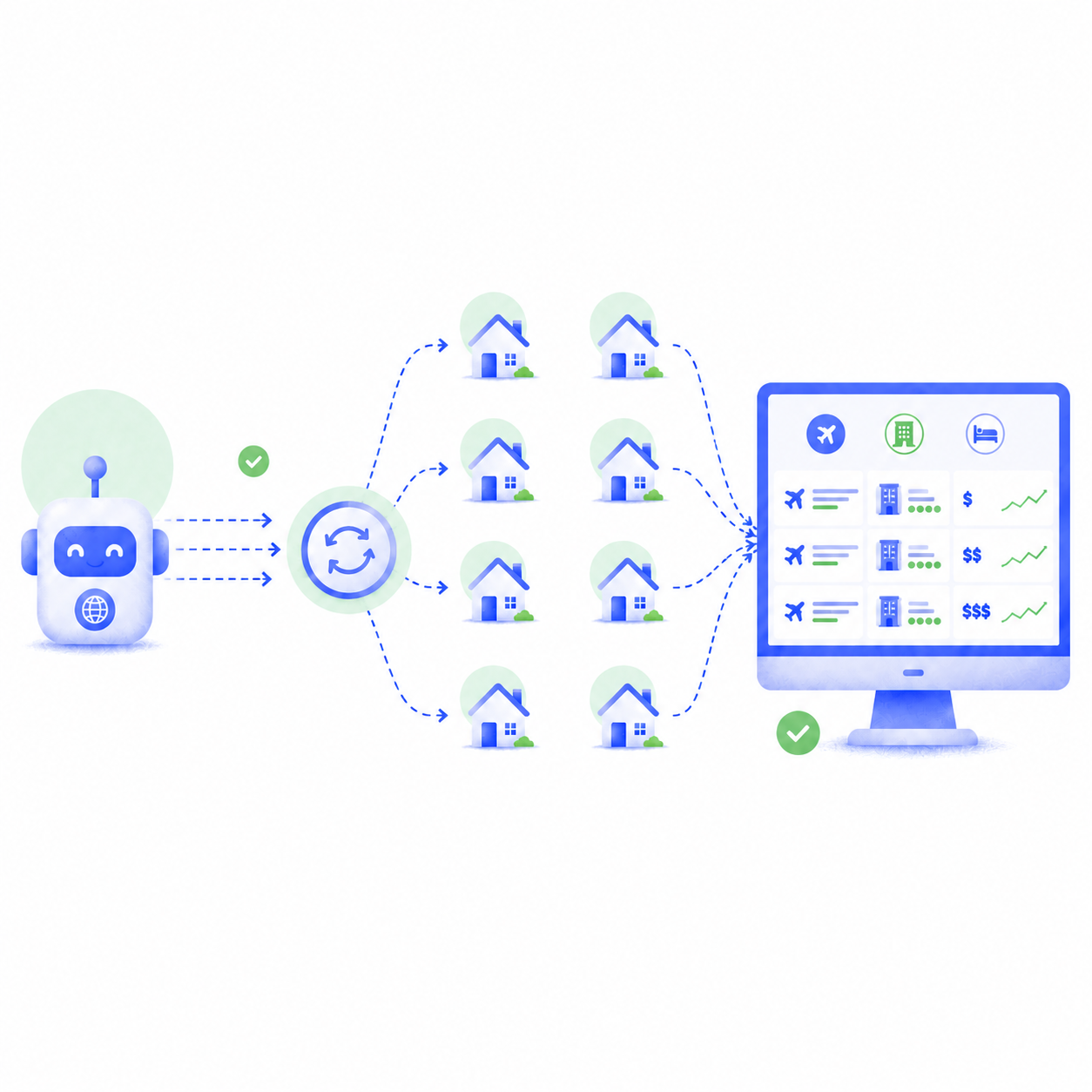
IP rotation improves travel fare collection by breaking the two mechanisms that most reliably corrupt fare data at scale: per-IP rate limits and behavioral price inflation.
Without rotation, every repeat request from the same IP creates two problems. First, platforms track request frequency and block IPs exceeding thresholds, cutting you off mid-scrape. Second, repeat searches from the same IP signal a high level of booking intent, which algorithms interpret as a reason to raise prices.
We've seen this pattern across the major OTAs we've tested against: a fresh residential IP consistently returns lower, more stable fares than a re-used one. If you want to see lower prices, pick a plan and start scraping with GoProxies today.
Where Rotating Proxies Make the Biggest Impact?
Rotating residential proxies make the biggest difference wherever the travel data you collect depends on where the platform thinks you're located, which, in travel, is almost every search.
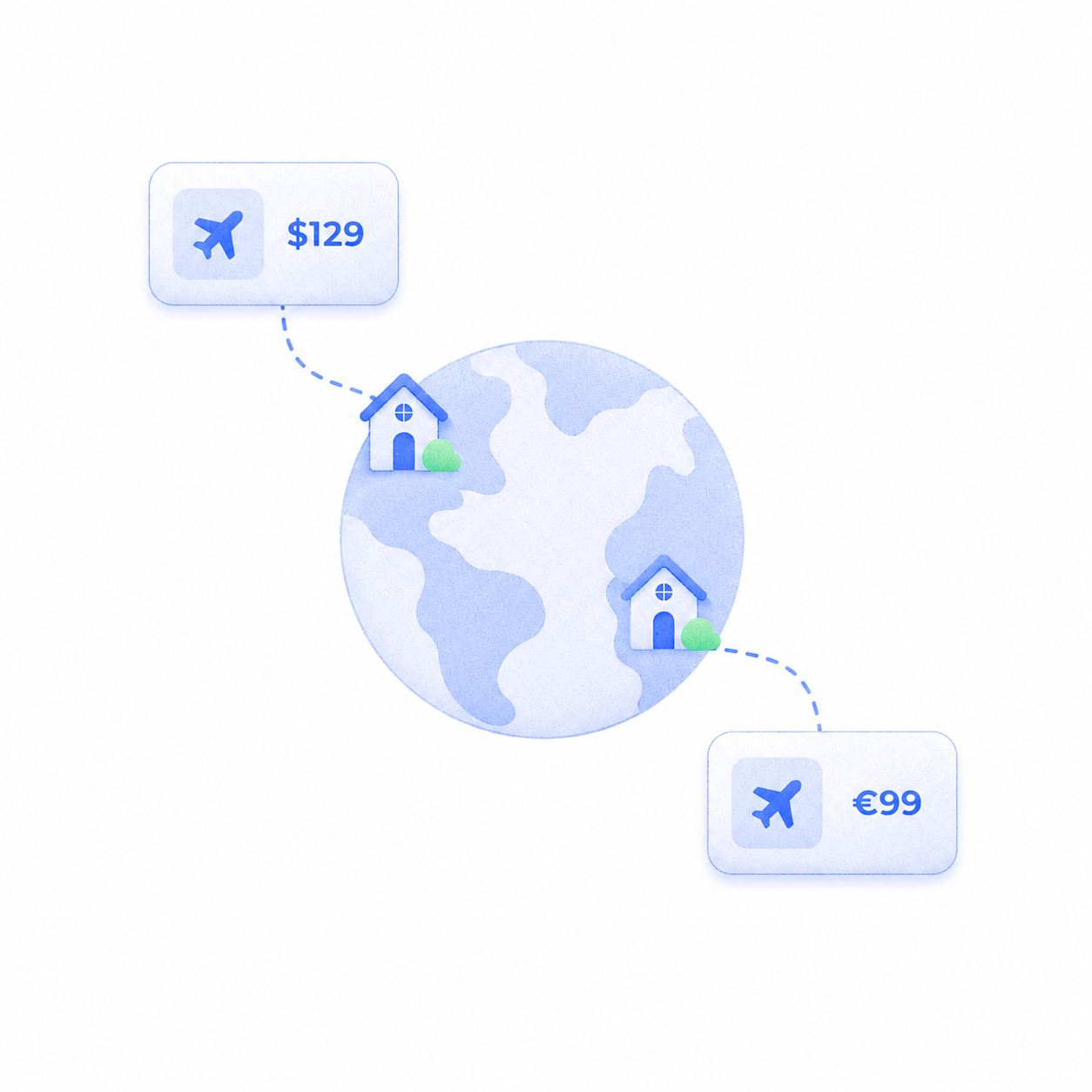
The practical impact is clearest in two areas. First, geo-specific fare collection: many airline routes have market-specific pricing that only appears when you search from a residential IP in that market. This is especially true on routes between high-income and lower-income regions, where the same seat can differ drastically depending on your detected point of sale.
Second, OTA rate parity monitoring: comparing prices across Kayak, Booking.com, and direct airline sites requires appearing as a local user on each – a datacenter IP gets either blocked or served a non-accurate price. With GoProxies’ rotating residential IPs, your requests will go through every time, so you can collect accurate information on your own terms!
Boost Your Business With GoProxies
Level up your business with seamless scraping for travel fare aggregation, including buses, trains, taxis, or airplanes, and countless other use cases with our proxy products.











Blending GoProxies Into Your Workflow
Our extensive documentation library is the key to successful integration with various third-party tools. Easily combine our rotating residential proxies with the tools you already use for successful travel data scraping projects.

Built for Travel Fare Collection Workflows
Frequently Asked Questions
Rotating residential proxies are a type of proxy that uses real IPs from real people and automatically changes them with each new request. This helps your traffic appear natural, enabling you to collect travel data without being blocked or detected.
No. Free proxies tend to be unreliable, slow, and often get blocked quickly. They also pose countless security risks. A paid, high-quality rotating residential proxy provider will give you stable connections, better scraping performance, and consistent access for accurate travel fare aggregation.
A travel fare aggregator is a platform that pulls pricing data from airlines, hotels, and car rental providers into one place, so travelers can easily compare options without checking dozens of websites individually. This includes websites like Kayak, Airbnb, Skyscanner, or Google Flights.
To collect travel data, you need a proxy that won’t be flagged as a bot. Rotating residential proxies are the best as they use IPs from regular people, mimicking authentic traffic, so you won’t get flagged. Moreover, proxy rotation ensures that each request receives a new IP address, resulting in a smooth workflow.