
Scrape Amazon as a Real Local Shopper in Any Market
Amazon hosts 350-600M SKUs globally and protects them with a bot-detection system that flags datacenter IPs. GoProxies help you collect live pricing, product listings, Buy Box changes, and reviews without blocks or CAPTCHA walls.

What Are Rotating Residential Proxies for Amazon Scraping?
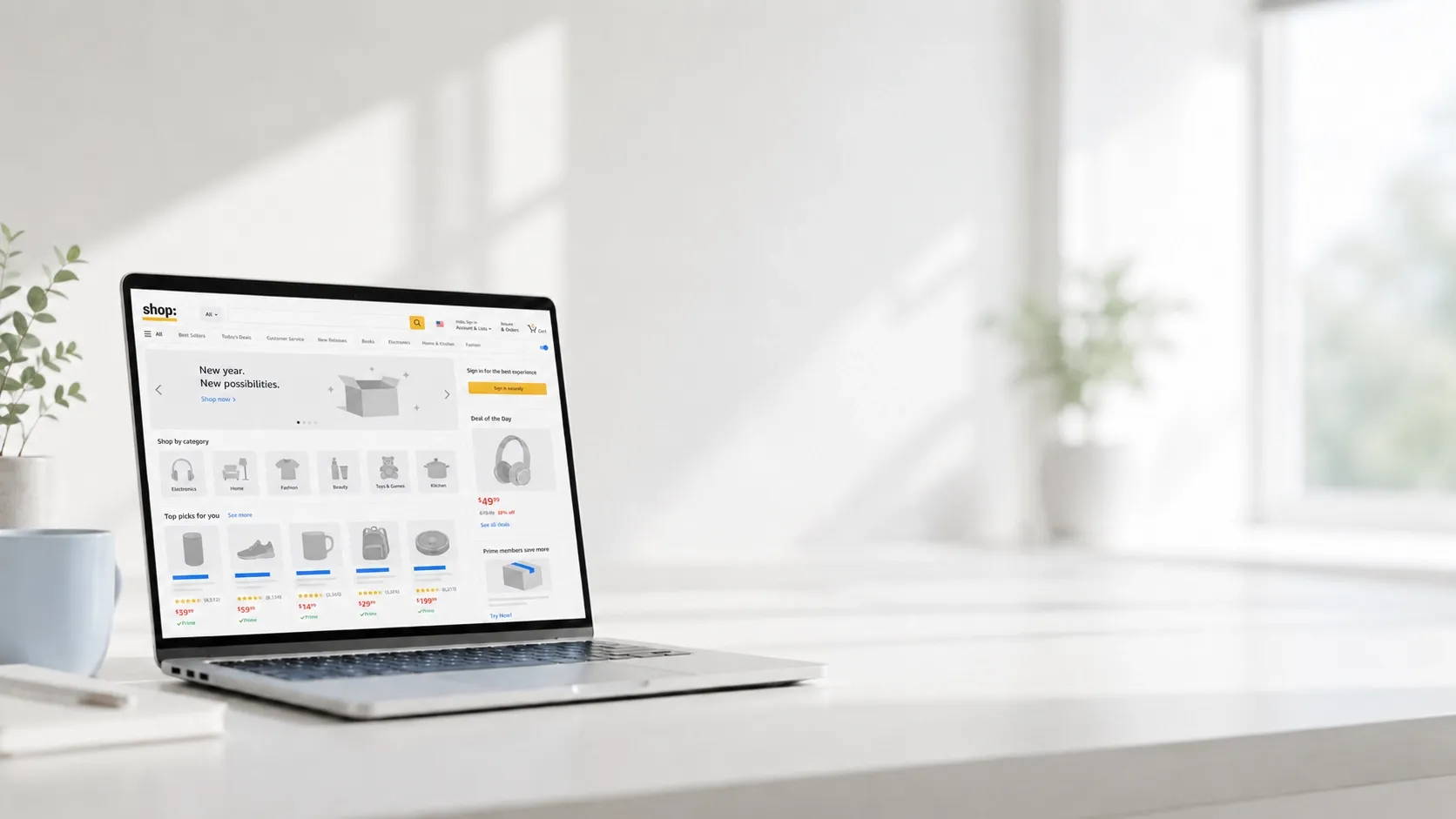
Rotating residential proxies let your scraper collect Amazon data as a real local shopper in any market, rather than an obvious automated request that Amazon's systems identify and block within seconds. The distinction matters more than most teams realize.
Amazon doesn't just rate-limit repeat requests. It calculates a "human likelihood score" for each request, considering IP reputation, TLS fingerprint, browser signals, and behavioral patterns simultaneously. Datacenter IPs from AWS, Google Cloud, and Azure are almost always flagged as suspicious because ordinary consumers don't browse Amazon via cloud servers.
A Python-based script that rotated datacenter IPs that may have succeeded in 2022 now has a depressing success rate of 2% against Amazon's 2026 infrastructure. Our 30M+ residential proxies route each request through a real ISP-assigned IP address, giving your pipeline a consumer identity Amazon's detection systems have no reason to distrust.
The result: your scraper receives the same complete data a local buyer would see, including active listing counts, listing prices, days on market, demand scores, and listing page viewers per property, rather than the placeholder content platforms may serve to detected bots.


Never Lose Amazon Data to Blocks Again
Amazon works hard to figure out if you’re a bot, flags repeated IPs, and throws CAPTCHA challenges. GoProxies distributes your traffic across clean IPs, keeping your pipeline running uninterrupted.

Overcome CAPTCHA & Bot Checks
Amazon's anti-bot strategy combines image recognition, logic challenges, and invisible proof-of-work that force scrapers to spend their resources, raising the cost of automated collection. CAPTCHA gets triggered after a few requests from the same IP. Our residential IPs behave like real shoppers, so they pass Amazon's defenses where datacenter IPs fail, with fewer CAPTCHA challenges, fewer broken pipeline runs, and more complete datasets.

Access Any Amazon Marketplace
Amazon invalidates sessions when it detects unusual traffic, especially when scraping multiple categories simultaneously. Sticky sessions hold the same IP for a defined time window, maintaining the consistent identity Amazon expects from a real shopper. Per-session rotation keeps the same IP for a full session before rotating to a fresh IP. Both prevent the mid-session resets that create gaps in your dataset.

Scale Without Hitting Limits
Amazon enforces strict rate limits that cut off high-frequency requests from the same IP long before a large-scale job’s done. A mid-size e-commerce brand monitoring competitor pricing across Amazon and a few direct competitors typically runs tens of thousands of requests per day, triggering IP bans within minutes without proper residential rotation. GoProxies distributes traffic across millions of IPs, keeping per-IP request counts low enough to sustain that volume continuously.

Forget IP Blacklisting
Amazon's IP reputation database doesn't just block individual addresses; it analyzes the ASN each IP belongs to and blocks entire datacenter IP ranges from cloud providers like AWS EC2, GCP, Azure, and DigitalOcean. Our 30M+ residential IPs, with no datacenter ASN and no prior scraping reputation, rotate automatically across requests, so no single address accumulates enough signal to trigger a ban.
Why Do Amazon Scrapers Need Rotating Residential Proxies?
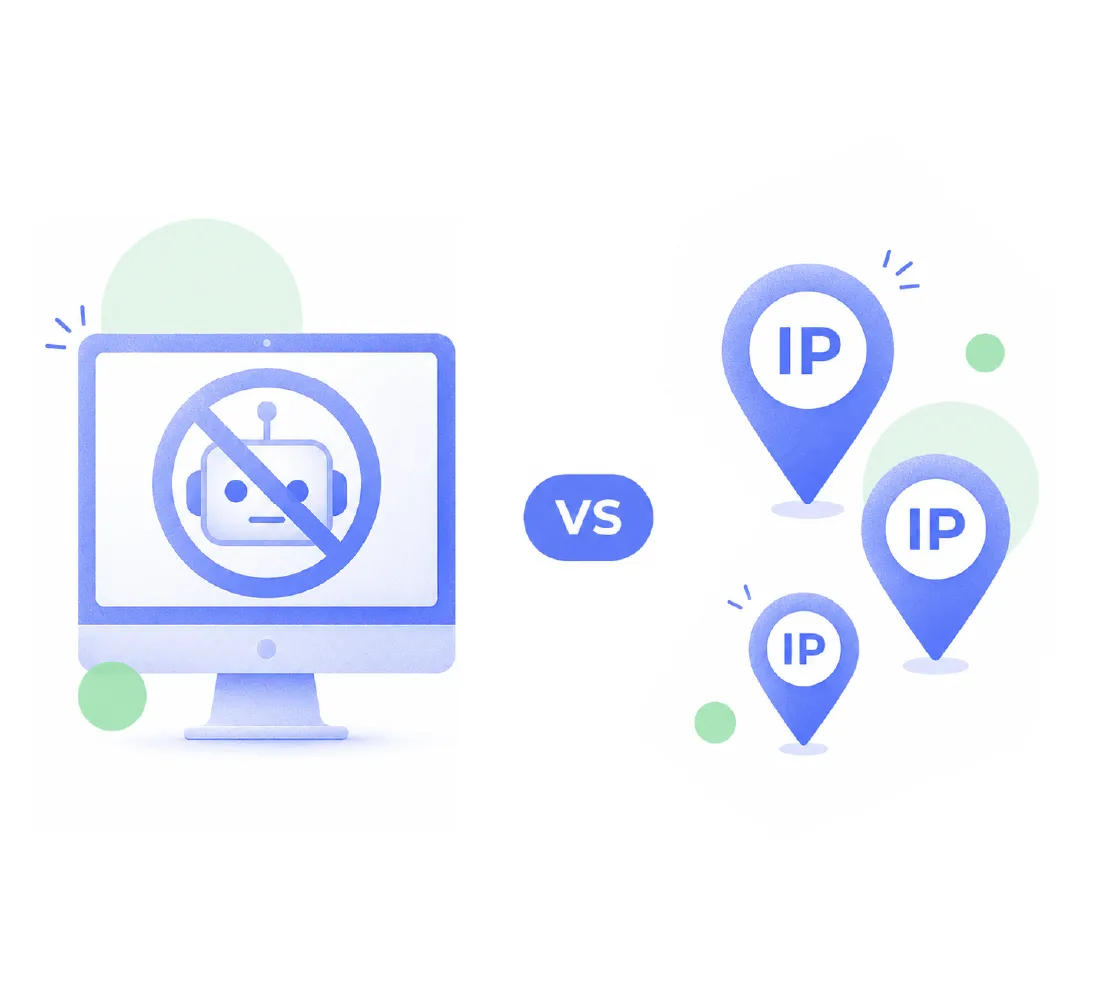
Rotating residential proxies are necessary for Amazon scraping because they distinguish between residential and non-residential traffic at the infrastructure level, and the difference is staggering.
Amazon maintains a massive IP reputation database that analyzes each IP address and its owner, comprehensively blocking traffic from data center providers like AWS, Google Cloud, Microsoft Azure, and others, because ordinary consumers don't browse shopping websites via cloud servers.
As we said, Python scripts with rotating datacenter proxies that worked in 2024 now have a success rate of approximately 2% against Amazon. And you can’t do anything with a 2% complete dataset.
Our residential IPs are assigned by ISPs to real households, so anti-bot systems have no choice but to trust them. Get a 100% complete dataset with our residential proxies today.
How Does IP Rotation Improve Amazon Scraping at Scale?
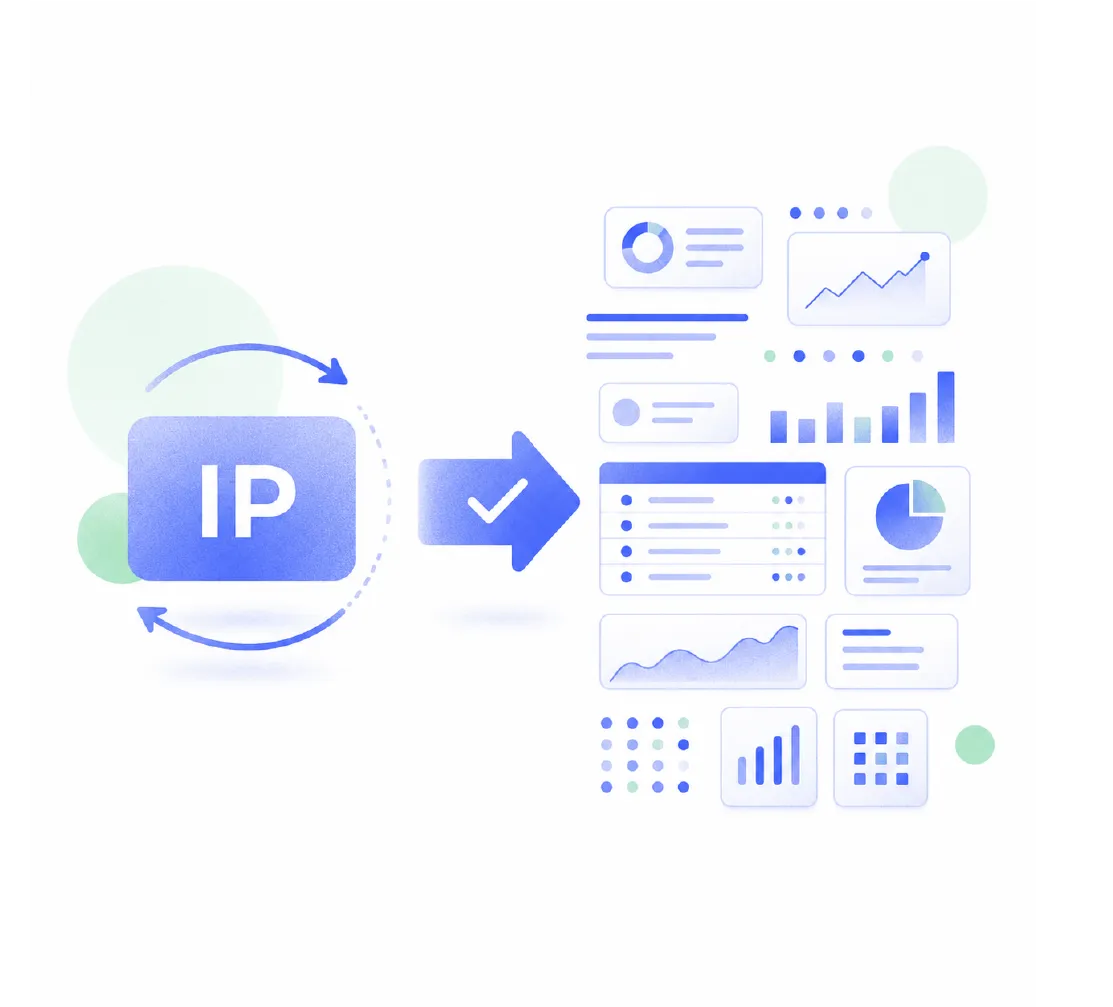
IP rotation improves Amazon scraping by preventing the two failure modes that break collection pipelines at scale: per-IP rate limits and behavioral-detection accumulation.
Without IP rotation, every repeated request coming from the same IP causes two big problems. First, Amazon tracks request frequency per IP address and blocks addresses that exceed thresholds, cutting off your workflow and leaving gaps in your dataset.
Second, Amazon builds behavioral profiles over time; a reused IP with prior scraping history starts each session with a lower human-likelihood score, making detection faster on later runs.
With IP rotation or sticky sessions, you can decide how often your IP address changes. Per-request and per-session rotations do what their name suggests, and you’re in control of how often each IP runs.
With sticky sessions, your rotating residential IP address stays the same for a predetermined time period, which is best for a consistent, local buyer identity. Try it out today.
Where Do Rotating Residential Proxies Make the Biggest Impact on Amazon?
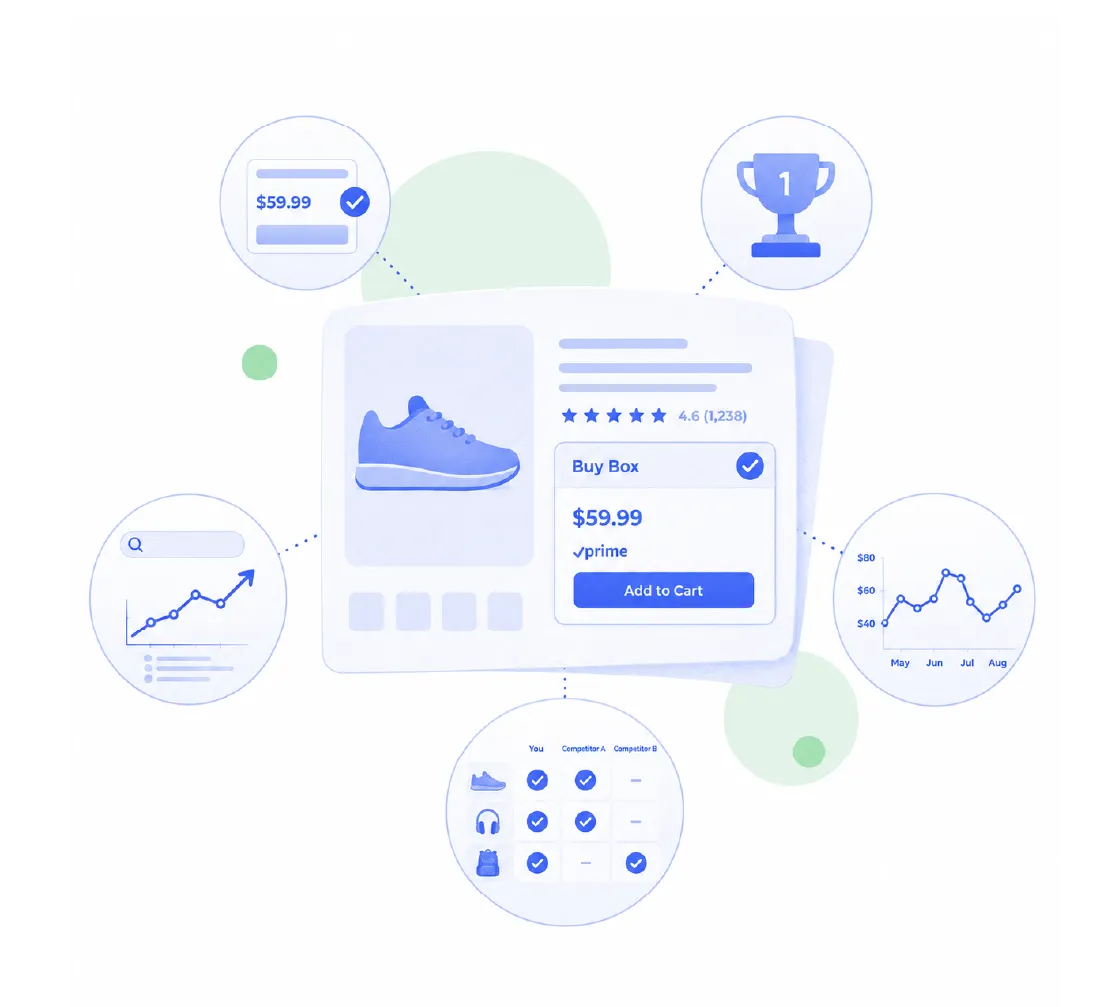
Rotating residential proxies are critical for high-impact Amazon scraping use cases where dataset accuracy and scale matter the most. This includes tracking Buy Box ownership, monitoring historical price fluctuations, and analyzing competitor listings across multiple regions.
Rotating residential proxies also enable stable access to localized marketplaces, ensuring that the data reflects authentic user experiences in different countries.
Whether you’re monitoring thousands of products or analyzing trends across different categories, rotating residential proxies eliminate disruptions and data gaps. This allows your team to make faster, data-driven decisions without being limited by Amazon’s restrictions.
Boost Your Business With GoProxies
Built for Amazon data pipelines of every scale, from individual seller research to competitive intelligence across multiple marketplaces and millions of SKUs.










Blending GoProxies Into Your Workflow
Our extensive library of documentation is the key to successful integration with various third-party tools. Easily integrate our rotating residential proxies with the tools you already use for seamless Amazon scraping.

Designed for Amazon Scraping on Your Terms
Frequently Asked Questions
An Amazon scraper is a tool that automatically extracts structured product data from Amazon at scale, including product listings, pricing, ASINs, merchant profiles, reviews, ratings, Buy Box status, inventory availability, and more across all product categories. The data feeds competitor analysis, price monitoring, dropshipping research, and market trend analysis.
No. Free scrapers typically offer limited locations, no IP rotation, and unethically sourced IPs that Amazon has already blacklisted. Beyond being constantly blocked, free proxy pools pose legal and data integrity risks. For any commercial use case (pricing intelligence, competitor monitoring, inventory tracking, etc.), the data quality difference between a free scraper and a paid residential proxy setup is staggering.
Scraping publicly accessible Amazon data is legal; US courts have consistently held that publicly available data isn't protected. Amazon's Terms of Service prohibit automated scraping, but these violations aren't criminal offenses. You should nonetheless focus on publicly accessible product and merchant data, avoid login-protected or personally identifiable information, and send requests at a responsible frequency that doesn't disrupt services for actual shoppers.
To scrape Amazon, you need a reliable scraper with rotating residential IPs. Your scraper will extract data, but its long-term success depends heavily on stable connections and on avoiding Amazon’s detection. Using high-quality rotating residential proxies ensures your scraper has consistent access, reduced blocking, and easy scalability.